The Electromagnetic Spectrum

Light is more than what eyes see. The electromagnetic spectrum encompasses all forms of electromagnetic radiation, from radio waves longer than buildings to gamma rays smaller than atomic nuclei. Understanding this spectrum reveals invisible universe and enables technologies from microwave ovens to medical imaging.

The Electromagnetic Spectrum
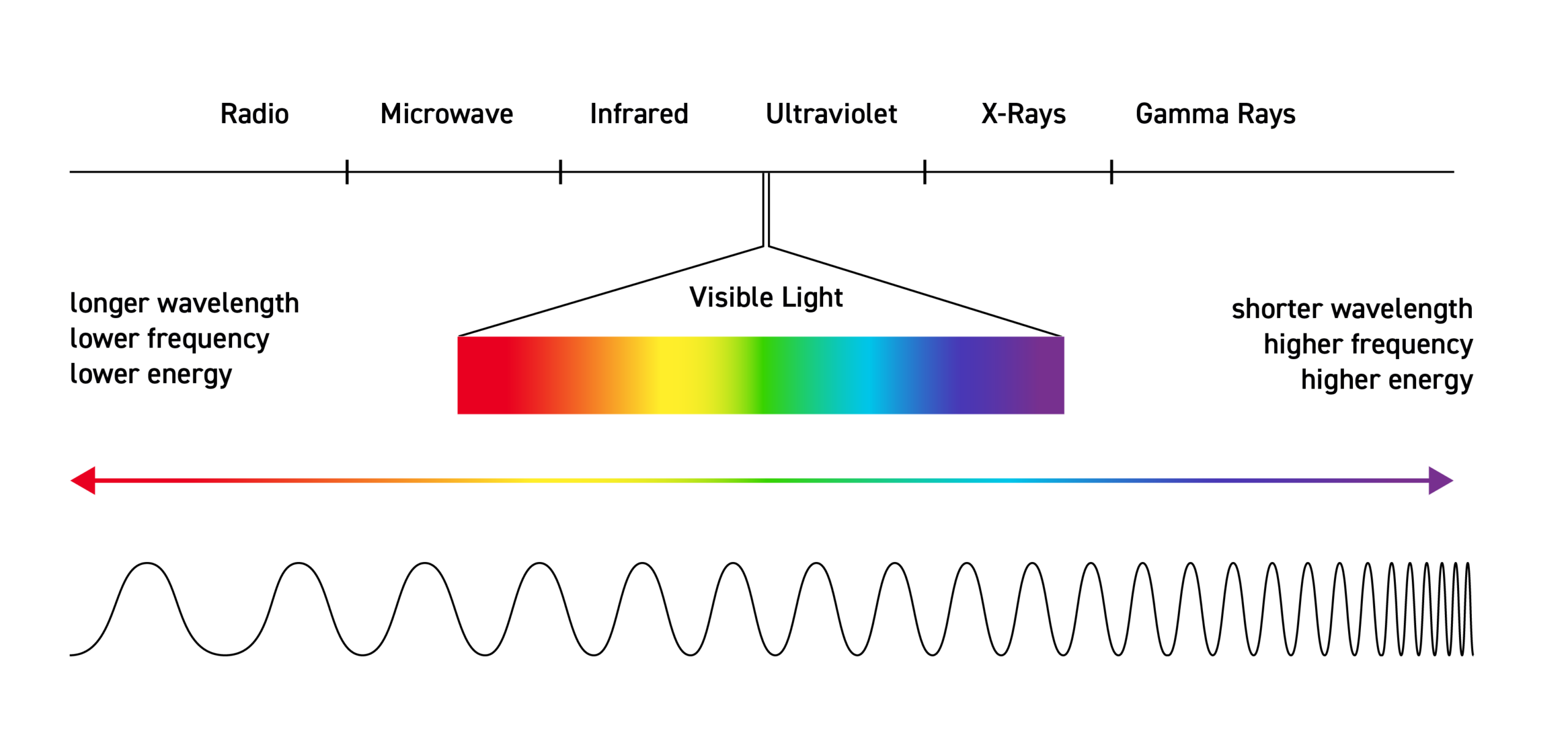
The Electromagnetic Spectrum

Electromagnetic radiation consists of oscillating electric and magnetic fields traveling at light speed. It requires no medium, traveling through vacuum of space. All electromagnetic radiation shares same nature, differing only in wavelength and frequency. Shorter wavelength means higher frequency and more energy per photon.

Radio waves have longest wavelengths, from millimeters to kilometers. They penetrate atmosphere easily, enabling communication. AM radio uses longer waves bending around obstacles; FM uses shorter waves for better sound quality. Television, Wi-Fi, Bluetooth, cellular networks all use radio frequencies. Radio astronomy reveals universe invisible to optical telescopes.

Microwaves range from about one millimeter to one meter. They penetrate clouds but absorb by water molecules—why microwave ovens work, exciting water in food. Microwave communication links satellites to ground. Cosmic microwave background radiation, faint afterglow of Big Bang, provides evidence for universe’s origin.

Infrared radiation lies between microwaves and visible light. All objects emit infrared based on temperature—thermography sees this. Infrared reveals cool stars, planetary surfaces, and through dust obscuring visible light. Remote controls, night vision, heat-seeking missiles use infrared. Greenhouse gases trap infrared, warming Earth.

Visible light occupies narrow spectrum portion, from about 400 to 700 nanometers. Sun emits most strongly in visible range, no coincidence—our eyes evolved to use available light. Different wavelengths appear as colors: violet shortest, red longest. Visible light reveals most of what we know about universe, but it’s just tiny window.

Ultraviolet radiation shorter than visible, higher energy. Sun emits UV; ozone layer absorbs most, protecting life. UV causes sunburn, skin cancer, but also enables vitamin D synthesis. UV reveals hot stars, galaxy formation. UV lamps sterilize equipment. Some insects see UV, revealing flower patterns.

X-rays even shorter, higher energy. They penetrate soft tissue but absorbed by bone—medical imaging exploits this. X-ray telescopes reveal high-energy universe: black holes, neutron stars, supernova remnants. Too energetic for lenses, X-ray optics use grazing incidence mirrors. Airport security, crystallography use X-rays.

Gamma rays shortest, most energetic. Produced by nuclear reactions, radioactive decay, black holes, supernovae. Gamma-ray bursts are universe’s most energetic events. Gamma rays destroy biological tissue but also treat cancer through radiotherapy. Gamma-ray telescopes reveal most violent universe processes.

All electromagnetic radiation travels at same speed: 299,792,458 meters per second in vacuum. This speed, light speed, is universe’s speed limit. Nothing with mass reaches it. Light from Sun takes 8 minutes to reach Earth; from nearest star, 4 years; from distant galaxies, billions years.

Wavelength determines interaction with matter. Radio waves pass through walls; visible light blocked; X-rays penetrate tissue but stopped by bone; gamma rays require dense shielding. These differences enable diverse applications and determine what each wavelength reveals about universe.

Atmosphere blocks most electromagnetic radiation. Visible light and some radio, microwave, infrared reach ground. Ultraviolet mostly absorbed by ozone. X-rays and gamma rays absorbed high in atmosphere. This protects life but requires space telescopes for full-spectrum astronomy.

Spectroscopy analyzes electromagnetic radiation to reveal composition. Every element absorbs and emits specific wavelengths, creating spectral fingerprints. Analyzing starlight reveals star composition, temperature, motion. This technique, applied across spectrum, reveals universe’s chemistry without sampling.

Doppler effect shifts wavelengths when source moves. Toward observer compresses waves (blueshift); away stretches them (redshift). Galaxy redshifts reveal universe expanding. This discovery, from visible light spectra, revolutionized cosmology. Same principle works across spectrum.

Technologies exploiting spectrum surround us. Radio and TV broadcast. Microwave communication. Infrared remote controls. Visible light everywhere. UV sterilization. X-ray medical imaging. Gamma cancer treatment. Understanding spectrum means understanding tools modern world depends on.

The electromagnetic spectrum reveals universe invisible to eyes alone. Each wavelength opens new window, showing different aspects of cosmos. Together they compose complete picture, from cosmic microwave background to gamma-ray bursts, from cell phone signals to medical diagnoses. Light, in all forms, illuminates.


Financial Literacy Basics

Financial literacy—understanding how money works—is essential for navigating modern life, yet it’s rarely taught systematically. Basic concepts of earning, spending, saving, investing, and protecting assets provide foundation for financial wellbeing regardless of income level.

Financial Literacy Basics

Financial Literacy Basics

Budgeting is fundamental. Tracking income and expenses reveals where money goes. The goal is spending less than you earn, creating surplus for savings and investment. Zero-based budgeting assigns every dollar a purpose. The 50/30/20 rule allocates 50% to needs, 30% to wants, 20% to savings and debt repayment. Consistency matters more than perfection.

Emergency fund is first savings priority. Three to six months of essential expenses in accessible account protects against job loss, medical emergency, or unexpected repairs. Without this cushion, unexpected expenses force high-interest debt. Emergency fund provides stability and peace of mind.

Debt can be useful or destructive. Mortgage debt finances home ownership, potentially building wealth. Student debt invests in future earning capacity. Credit card debt at high interest rates erodes wealth rapidly. The key distinction is between debt that acquires appreciating assets and debt that funds consumption. Paying high-interest debt is usually best investment.

Compound interest is most powerful financial concept. Earning interest on interest creates exponential growth over time. Starting early matters enormously: investing $5,000 annually from age 25 versus 35 can mean hundreds of thousands difference at retirement. Compound interest works for savers and against borrowers; understanding it transforms financial behavior.

Credit scores measure creditworthiness. Payment history, amounts owed, length of credit history, new credit, and credit mix determine scores ranging from 300-850. Higher scores mean lower borrowing costs. Checking credit reports annually for errors, paying bills on time, and keeping credit utilization low maintain good scores.

Investing grows wealth beyond what saving alone achieves. Stocks represent ownership in companies, offering growth potential with volatility. Bonds are loans to governments or companies, offering income with lower risk. Diversification across different investments reduces risk. Long-term perspective allows riding out market fluctuations.

Retirement accounts offer tax advantages. 401(k)s through employers often include matching contributions—free money not to miss. IRAs provide additional tax-advantaged space. Compound growth over decades in tax-advantaged accounts dramatically exceeds taxable investing. Starting early and contributing consistently matters more than perfect investment choices.

Risk and return trade off. Higher potential returns come with higher risk and volatility. Savings accounts offer safety but minimal returns. Stocks offer growth potential but can lose value temporarily. Asset allocation—mixing stocks, bonds, and cash—should match time horizon and risk tolerance. Young investors can take more risk; those near retirement need stability.

Insurance protects against catastrophic loss. Health insurance prevents medical bankruptcy. Auto insurance covers accidents. Homeowners or renters insurance protects property. Life insurance supports dependents. Disability insurance replaces income if unable to work. Insurance is not investment but protection; paying small premiums prevents devastating losses.

Taxes significantly affect finances. Understanding marginal tax rates (each additional dollar taxed at higher rate) explains why raises sometimes disappoint. Tax-advantaged accounts reduce current taxes. Deductions and credits reduce taxable income. Tax planning, not just preparation, minimizes lifetime tax burden.

Housing decisions have enormous financial impact. Renting offers flexibility and predictable costs. Owning builds equity but requires maintenance and carries risk. The choice depends on local markets, time horizon, and personal circumstances. Housing costs should generally not exceed 30% of income.

Inflation erodes purchasing power over time. Money today buys less in future. This is why saving alone is insufficient; investments must outpace inflation to maintain purchasing power. Historical inflation averages about 3%, meaning money halves in value about every 24 years.

Financial literacy enables informed decisions. It’s not about becoming expert but understanding enough to avoid common pitfalls and make choices aligned with values and goals. Small improvements in financial habits compound over lifetime into substantial differences in financial wellbeing.

Healthy Aging, Adding Life to Years

The goal of healthy aging is not merely living longer but living better—preserving physical function, cognitive ability, and quality of life into advanced age. Lifespan has increased dramatically over past century, but healthspan (years of healthy life) has not kept pace. Many spend final decades burdened by chronic disease and disability. Changing this requires understanding aging as modifiable process.

Healthy Aging: Adding Life to Years

Aging is not simply passage of time but accumulation of molecular and cellular damage. Hallmarks include genomic instability, telomere attrition, epigenetic changes, loss of protein homeostasis, mitochondrial dysfunction, cellular senescence, stem cell exhaustion, and altered intercellular communication. These processes are interconnected and potentially modifiable.

Cellular senescence is particularly important. Senescent cells have stopped dividing but remain metabolically active, secreting inflammatory chemicals that damage surrounding tissue. They accumulate with age and contribute to multiple age-related diseases. Clearing senescent cells (“senolytics”) is promising therapeutic strategy.

Mitochondrial function declines with age. Mitochondria, the cell’s power plants, become less efficient, producing less energy and more damaging free radicals. This contributes to fatigue, muscle loss, and organ dysfunction. Exercise, particularly high-intensity interval training, improves mitochondrial health.

Telomeres, protective caps on chromosome ends, shorten with each cell division. When too short, cells senesce or die. Shorter telomeres are associated with faster aging and increased disease risk. Lifestyle factors—diet, exercise, stress management, sleep—influence telomere maintenance. This is one mechanism linking lifestyle to aging rate.

Muscle mass and strength decline progressively after middle age, a process called sarcopenia. This increases fall risk, reduces metabolic rate, and impairs function. Resistance training preserves muscle, building reserve that protects against age-related decline. It is never too late to start.

Bone density similarly declines, increasing fracture risk. Weight-bearing exercise, adequate calcium and vitamin D, and avoiding smoking and excess alcohol preserve bone. Osteoporosis is preventable and treatable; screening identifies those at risk.

Cognitive aging varies enormously. Some maintain sharp minds into 90s; others decline rapidly. Protective factors include education, cognitive engagement, social connection, physical activity, cardiovascular health, and hearing preservation (hearing loss is major dementia risk factor). The brain benefits from lifelong challenge.

Social connection is surprisingly powerful predictor of healthy aging. Loneliness increases mortality risk comparable to smoking. Maintaining relationships, community involvement, and sense of purpose protects against both physical and cognitive decline. Humans need connection at every age.

Diet matters increasingly with age. Protein needs increase to preserve muscle. Vitamin B12 absorption declines, making supplementation wise for many. Hydration becomes more challenging as thirst sensation diminishes. Nutrient-dense foods become more important as calorie needs decrease.

Preventive healthcare shifts with age. Cancer screening, cardiovascular risk assessment, bone density testing, and immunizations (flu, pneumonia, shingles) become more important. Medication review prevents polypharmacy complications. Regular check-ups catch problems early.

Adaptation is essential. Healthy aging does not mean no decline but successful adaptation to changes. Using hearing aids, walkers, or other assistive devices is not failure but wisdom. Modifying home to prevent falls, simplifying tasks, and accepting help preserve independence.

Purpose matters profoundly. Those with reason to wake up—work, volunteer, caregiving, creative pursuit—live longer and better. Retirement should include meaningful engagement, not just leisure. Purpose is medicine.

Attitude influences outcome. Those who view aging as opportunity rather than decline, who maintain optimism and resilience, fare better. This is not mere positive thinking but recognition that mindset shapes behavior, physiology, and social engagement.

Healthy aging is not accident but achievement. It requires attention across decades to the foundations—diet, exercise, sleep, connection, purpose, medical care—that accumulate into later-life vitality. Adding life to years is possible; it just requires intention.

The Smart Display, The Visual Voice Assistant

The smart display represents the evolution of the voice assistant from a disembodied voice to a visual interface. Building on the foundation of smart speakers like Amazon Echo and Google Home, smart displays add screens that transform what these devices can do. Video calls, visual recipes, photo slideshows, security camera feeds, and YouTube become accessible through voice commands, creating a new category of ambient home technology.

The leading platforms are Amazon’s Echo Show lineup and Google’s Nest Hub family, with Facebook’s Portal and Lenovo’s Smart Display also competing. Each integrates deeply with its parent company’s ecosystem, offering different strengths. Amazon emphasizes shopping, video calling, and Alexa skills. Google focuses on Assistant integration, YouTube, and Google Photos. The competition drives rapid innovation.

The Smart Display: The Visual Voice Assistant

The Smart Display

Video calling is transformative. A smart display on the kitchen counter means grandparents can video call grandchildren hands-free while cooking. The camera automatically frames subjects, follows movement, and uses wide-angle lenses to capture group calls. For families separated by distance, this casual, always-available connection is genuinely valuable.

Visual recipes guide cooking step-by-step. Ask for a recipe, and the display shows ingredients, instructions, and cooking videos. Voice control means never touching the screen with messy hands. Timers can be set for multiple dishes simultaneously. The kitchen becomes smarter without becoming more complicated.

Photo slideshows turn the device into digital picture frames when not actively used. Google Photos integration surfaces memories automatically. Amazon Photos does the same for Prime members. The display cycles through personal images, making the device feel personal and warm rather than like cold technology.

Smart home control becomes visual. See which lights are on, adjust thermostat temperature precisely, view security camera feeds, or check who’s at the door. Voice remains primary, but visual confirmation adds confidence and control. The smart display becomes the home’s command center.

Entertainment expands beyond audio. Watch news briefings, YouTube tutorials, or streaming service previews. Follow along with workout videos. View lyrics while music plays. The screen adds dimension to what were previously audio-only experiences.

Privacy features acknowledge the sensitivity of cameras in the home. Physical camera shutters, mute buttons, and indicators when the camera is active provide reassurance. Voice recording history can be reviewed and deleted. These controls are essential for consumer trust.

Ambient computing is the philosophy behind smart displays. The device is not something you actively use but something that’s present, ready to help when needed. It shows the time, weather, and calendar by default. It whispers reminders. It displays photos. It waits, unobtrusively, for your request.

Ecosystem integration determines utility. Amazon’s displays work best with Amazon services, Ring cameras, and Alexa-compatible devices. Google’s displays excel with Google services, Nest cameras, and Assistant integration. Choosing a platform means choosing an ecosystem, and switching costs are high.

Kids’ editions add durability and child-friendly content. Parental controls limit access and screen time. Educational skills and content make the device a learning tool. For families, specialized versions address concerns about children and screens.

The form factor varies widely. Some displays are designed for countertops, with small screens and compact footprints. Others are larger, meant for walls or tabletops as dedicated hubs. The common thread is placement in high-traffic areas where quick information and control are valuable.

The future includes deeper integration with more services, better camera and display technology, and more natural conversation. Multi-device experiences will allow seamless handoff between displays throughout the home. Artificial intelligence will make assistance more proactive and personalized.

The smart display succeeds because it fits naturally into domestic life. It doesn’t demand attention but offers help when needed. It connects families visually. It controls the increasingly smart home. It displays memories. It is technology that enhances home rather than competing with it, and that may be its greatest achievement.

Cybersecurity in an Age of Digital Vulnerability

Every day, billions of cyberattacks probe the digital infrastructure upon which modern civilization depends. Banks, hospitals, power grids, government agencies, and personal devices are under constant siege from hackers, criminals, state actors, and vandals. Cybersecurity has evolved from a technical specialty into a fundamental requirement for functioning in the twenty-first century. Understanding the threat landscape is the first step toward navigating it safely.

Cybersecurity in an Age of Digital Vulnerability

cybersecurity

The nature of threats has diversified enormously. Nation-state actors conduct espionage and prepare offensive capabilities for potential conflict. Their targets include military secrets, intellectual property, and critical infrastructure. Cybercriminal enterprises operate like businesses, complete with customer support, service-level agreements, and affiliate programs. Ransomware gangs encrypt hospital data and demand payment in cryptocurrency, sometimes paralyzing healthcare delivery. Hacktivists target organizations they oppose politically, defacing websites or leaking documents. Insider threats, whether malicious or accidental, exploit legitimate access.

Ransomware has emerged as particularly devastating. Attackers infiltrate networks, encrypt critical data, and demand payment for decryption keys. When the city of Atlanta was hit in 2018, many municipal services ground to a halt for days. The Colonial Pipeline attack in 2021 caused fuel shortages across the U.S. East Coast. Hospitals have been forced to divert ambulances and cancel surgeries. The business model works because downtime is so costly that paying the ransom often seems cheaper than the alternative.

Supply chain attacks represent an even more insidious vector. Rather than targeting a primary victim directly, attackers compromise a trusted vendor or software provider and use that access to reach multiple downstream targets. The SolarWinds attack, discovered in 2020, inserted malicious code into software updates distributed to thousands of organizations, including multiple U.S. government agencies. A single compromise multiplied into a sprawling intelligence-gathering operation.

The Internet of Things dramatically expands the attack surface. Every connected device, from security cameras to smart thermostats to medical implants, is a potential entry point. Many are manufactured with minimal security, using default passwords that users never change. The Mirai botnet demonstrated the danger, hijacking hundreds of thousands of insecure devices to launch massive distributed denial-of-service attacks that disrupted major internet platforms.

Phishing remains the most common entry vector, exploiting human psychology rather than technical vulnerabilities. Deceptive emails trick users into revealing credentials or installing malware. The most sophisticated attacks use spear-phishing, researching targets to craft convincing, personalized messages. Training users to recognize and resist phishing is essential but never sufficient; eventually someone will click.

The defense landscape is equally complex. Traditional perimeter security, the “castle and moat” approach, is obsolete when the perimeter is everywhere. Zero trust architecture assumes no user or device is trusted by default, requiring continuous verification. Multi-factor authentication provides essential protection against credential theft. End-to-end encryption secures communications. Regular patching closes known vulnerabilities. Backups enable recovery from ransomware without paying.

Nation-states are increasingly involved in both offense and defense. The United States Cyber Command conducts offensive operations against adversaries. China’s cyber capabilities are integrated with its military strategy. Russia has used cyber operations as a component of hybrid warfare against Ukraine and others. International norms are embryonic; attribution is difficult; escalation risks are poorly understood.

For individuals, cybersecurity requires vigilance. Use strong, unique passwords for every account, managed by a password manager. Enable multi-factor authentication wherever available. Keep software updated. Be skeptical of unexpected messages, even from known contacts. Back up important data. Recognize that perfect security is impossible; the goal is to make yourself a harder target than the next person.

Cybersecurity is ultimately a collective challenge. Our networks are only as secure as their weakest node. As digital vulnerability deepens, the imperative for robust, accessible security grows. The alternative is a world where trust erodes, infrastructure falters, and the benefits of connectivity are outweighed by its risks.