The smart display represents the evolution of the voice assistant from a disembodied voice to a visual interface. Building on the foundation of smart speakers like Amazon Echo and Google Home, smart displays add screens that transform what these devices can do. Video calls, visual recipes, photo slideshows, security camera feeds, and YouTube become accessible through voice commands, creating a new category of ambient home technology.
The leading platforms are Amazon’s Echo Show lineup and Google’s Nest Hub family, with Facebook’s Portal and Lenovo’s Smart Display also competing. Each integrates deeply with its parent company’s ecosystem, offering different strengths. Amazon emphasizes shopping, video calling, and Alexa skills. Google focuses on Assistant integration, YouTube, and Google Photos. The competition drives rapid innovation.
The Smart Display: The Visual Voice Assistant
Video calling is transformative. A smart display on the kitchen counter means grandparents can video call grandchildren hands-free while cooking. The camera automatically frames subjects, follows movement, and uses wide-angle lenses to capture group calls. For families separated by distance, this casual, always-available connection is genuinely valuable.
Visual recipes guide cooking step-by-step. Ask for a recipe, and the display shows ingredients, instructions, and cooking videos. Voice control means never touching the screen with messy hands. Timers can be set for multiple dishes simultaneously. The kitchen becomes smarter without becoming more complicated.
Photo slideshows turn the device into digital picture frames when not actively used. Google Photos integration surfaces memories automatically. Amazon Photos does the same for Prime members. The display cycles through personal images, making the device feel personal and warm rather than like cold technology.
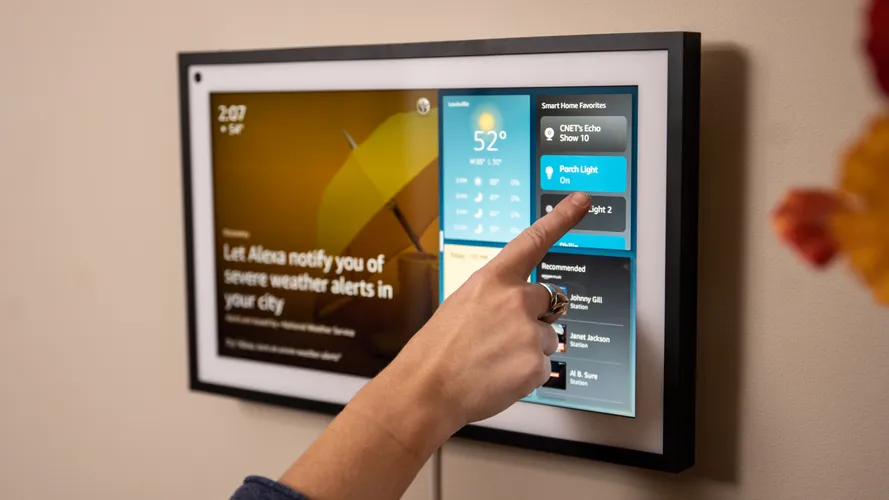
Smart home control becomes visual. See which lights are on, adjust thermostat temperature precisely, view security camera feeds, or check who’s at the door. Voice remains primary, but visual confirmation adds confidence and control. The smart display becomes the home’s command center.
Entertainment expands beyond audio. Watch news briefings, YouTube tutorials, or streaming service previews. Follow along with workout videos. View lyrics while music plays. The screen adds dimension to what were previously audio-only experiences.
Privacy features acknowledge the sensitivity of cameras in the home. Physical camera shutters, mute buttons, and indicators when the camera is active provide reassurance. Voice recording history can be reviewed and deleted. These controls are essential for consumer trust.
Ambient computing is the philosophy behind smart displays. The device is not something you actively use but something that’s present, ready to help when needed. It shows the time, weather, and calendar by default. It whispers reminders. It displays photos. It waits, unobtrusively, for your request.
Ecosystem integration determines utility. Amazon’s displays work best with Amazon services, Ring cameras, and Alexa-compatible devices. Google’s displays excel with Google services, Nest cameras, and Assistant integration. Choosing a platform means choosing an ecosystem, and switching costs are high.
Kids’ editions add durability and child-friendly content. Parental controls limit access and screen time. Educational skills and content make the device a learning tool. For families, specialized versions address concerns about children and screens.
The form factor varies widely. Some displays are designed for countertops, with small screens and compact footprints. Others are larger, meant for walls or tabletops as dedicated hubs. The common thread is placement in high-traffic areas where quick information and control are valuable.
The future includes deeper integration with more services, better camera and display technology, and more natural conversation. Multi-device experiences will allow seamless handoff between displays throughout the home. Artificial intelligence will make assistance more proactive and personalized.
The smart display succeeds because it fits naturally into domestic life. It doesn’t demand attention but offers help when needed. It connects families visually. It controls the increasingly smart home. It displays memories. It is technology that enhances home rather than competing with it, and that may be its greatest achievement.